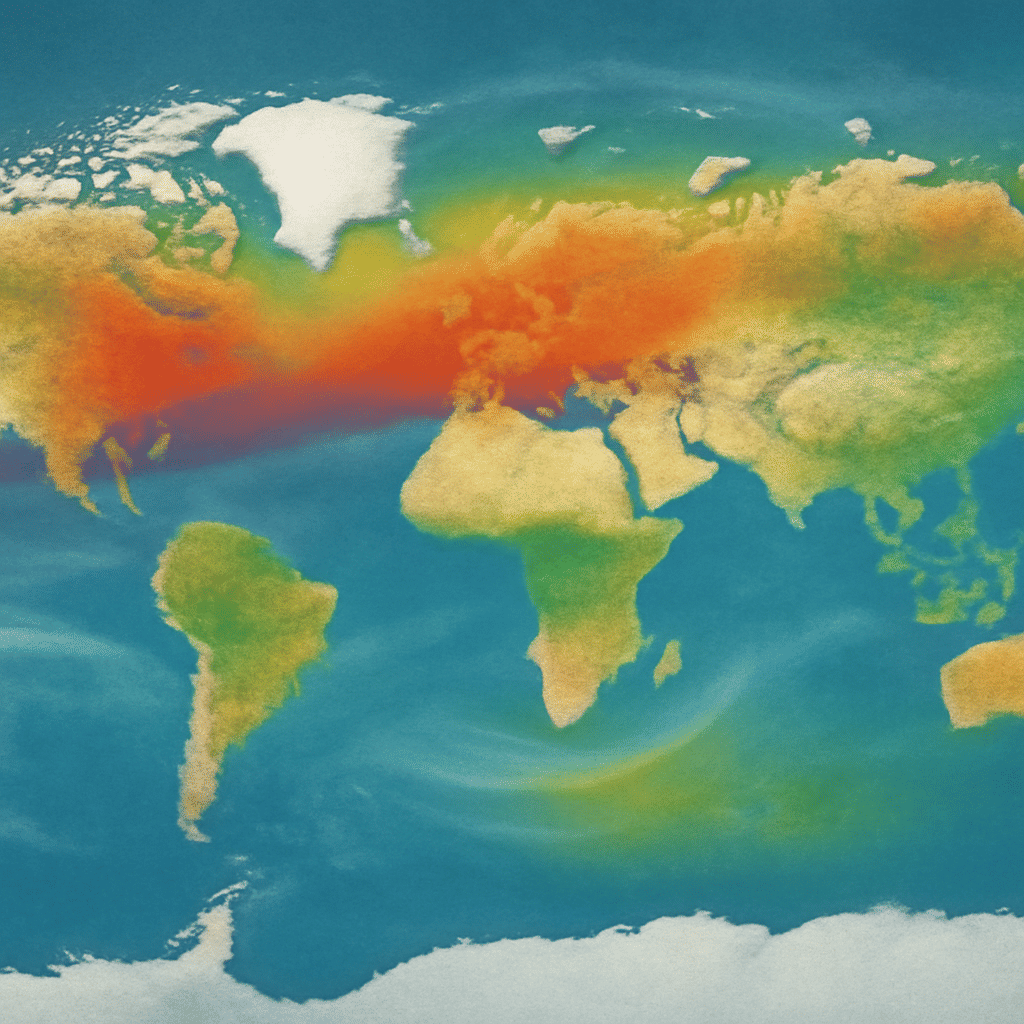
In the intricate web of Earth's climate system, particles, often referred to as aerosols, hold substantial sway over both short-term weather patterns and long-term climate changes. These minuscule constituents, suspended in the atmosphere, come from a myriad of natural and anthropogenic sources, and their interaction with climate forces is both complex and multifaceted.
Particles in the atmosphere can originate from various natural sources such as volcanic eruptions, forest fires, sea spray, and dust storms. Human activities also contribute significantly, particularly from industrial emissions, vehicle exhaust, and agriculture. Once airborne, these particles can travel vast distances, affecting remote ecosystems and climate patterns.
One of the critical roles of aerosols is their impact on solar radiation. Depending on their composition, aerosols can either scatter or absorb sunlight. For instance, sulfate aerosols, commonly produced from industrial activities, reflect sunlight back into space, which leads to a cooling effect on the Earth’s surface. Conversely, black carbon, often resulting from biomass burning and fossil fuel combustion, absorbs solar energy, contributing to atmospheric warming.
Beyond direct sunlight interaction, aerosols influence cloud formation and properties—a concept known as indirect effects. Aerosols serve as cloud condensation nuclei, around which cloud droplets can form. An increased concentration of aerosols can lead to the formation of more but smaller cloud droplets, enhancing cloud reflectivity and longevity, which can also contribute to climate cooling.
The balance of these aerosol effects—some of which cool the Earth, while others contribute to warming—introduces significant variability and uncertainty in climate models. This complexity is further compounded by the relatively short atmospheric lifespan of aerosols, typically spanning days to weeks, compared to greenhouse gases like carbon dioxide, which can persist for decades to centuries.
In the broader climate narrative, understanding aerosols is crucial as efforts to mitigate climate change intensify. For example, reducing sulfate aerosol emissions for improving air quality might inadvertently diminish their cooling effect, temporarily accelerating warming trends until greenhouse gas reductions take more substantial effect.
In conclusion, particles in the atmosphere, though tiny, have an outsized impact on climate dynamics. Bridging the gaps in aerosol research will be pivotal in enhancing the precision of climate models and informing policy decisions. As we strive to better understand these influential players, their role in the climate system remains both a challenge and an opportunity for advancing climate science.